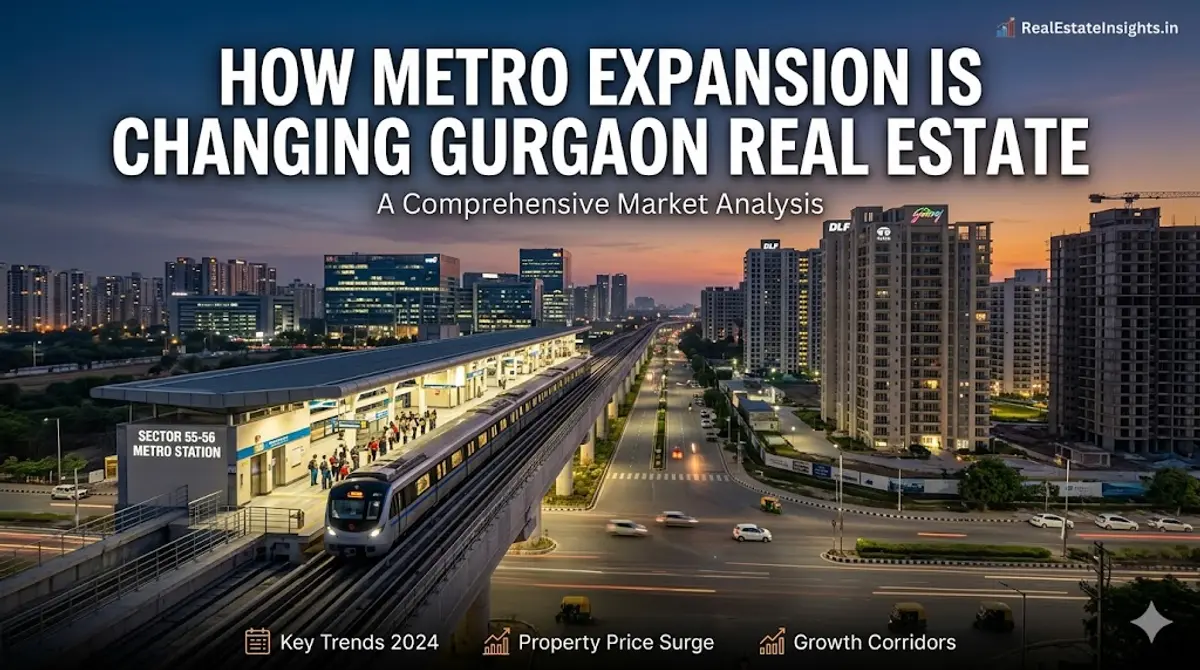
How Metro Expansion Is Changing Gurgaon Real Estate
How Metro Expansion Is Changing Gurgaon Real Estate
Metro connectivity has become one of the most influential factors shaping the real estate market in Gurgaon. As the city continues to expand rapidly, improved public transportation has transformed how people live, work, and invest in property. The extension of metro networks and plans for new corridors have enhanced accessibility across residential and commercial zones, making Gurgaon one of the most attractive property markets in India.
For homebuyers, better metro connectivity means shorter travel times and improved convenience. For investors, it creates opportunities for long-term capital appreciation and stronger rental demand. As a result, metro expansion is playing a significant role in driving Gurgaon’s real estate growth.
Why Metro Connectivity Matters
Accessibility is one of the most important factors influencing property values. Locations with reliable public transportation attract more buyers because they offer easier commuting and reduce dependence on private vehicles.
Metro networks connect residential neighborhoods with business districts, shopping destinations, educational institutions, and transportation hubs. This convenience increases demand for nearby properties and supports long-term price appreciation.
Boost to Residential Real Estate
One of the biggest impacts of metro expansion is the growing demand for residential projects located close to metro stations. Families and working professionals increasingly prefer homes that offer seamless connectivity to their workplaces.
Developers have also responded by launching new projects near metro corridors, providing buyers with modern apartments, integrated townships, and mixed-use developments designed around transit accessibility.
Higher Property Appreciation
Historically, properties located near metro stations have experienced better value appreciation than areas with limited connectivity. As infrastructure improves and commuting becomes easier, demand naturally increases, pushing prices upward.
Investors who identify emerging metro corridors at an early stage often benefit from significant long-term appreciation as surrounding infrastructure develops.
Positive Impact on Rental Demand
Metro connectivity not only attracts homebuyers but also strengthens the rental market. Professionals working in Gurgaon’s corporate offices frequently seek rental accommodations near metro stations to minimize commuting time.
This growing demand allows investors to achieve higher occupancy rates and stable rental income while also benefiting from potential capital gains.
Encouraging Commercial Development
Metro expansion has also accelerated commercial real estate growth across Gurgaon. Businesses prefer office locations with excellent public transport access because they improve employee convenience and attract a larger workforce.
Retail spaces, co-working hubs, shopping complexes, and business centers often flourish around metro corridors, creating vibrant commercial ecosystems that further enhance nearby property values.
Supporting Emerging Locations
Metro connectivity has opened up opportunities in previously underdeveloped sectors by making them more accessible. Areas that were once considered distant are now becoming attractive investment destinations due to improved transportation infrastructure.
This shift enables balanced urban development while reducing pressure on already saturated locations.
Integration with Other Infrastructure Projects
The benefits of metro expansion become even greater when combined with projects such as the Dwarka Expressway, Southern Peripheral Road (SPR), and upgraded road networks.
Together, these developments create a comprehensive transportation ecosystem that improves regional connectivity and enhances Gurgaon’s attractiveness for residents, businesses, and investors.
Lifestyle Benefits for Residents
Living near a metro station offers several practical advantages beyond property appreciation. Residents enjoy shorter commute times, lower transportation costs, reduced traffic stress, and easier access to major commercial and recreational destinations.
These quality-of-life improvements make metro-connected neighborhoods highly desirable among modern homebuyers.
Challenges to Consider
Although metro expansion positively influences real estate, buyers should avoid making investment decisions based solely on future announcements. Construction timelines, project execution, and surrounding infrastructure development should all be evaluated carefully.
Selecting projects by reputed developers in established or well-planned growth corridors remains an important part of making informed investment decisions.
Future Outlook
As Gurgaon continues expanding, metro connectivity is expected to play an even greater role in shaping the city's property market. Planned extensions and improved integration with other transportation systems are likely to create new investment hotspots and strengthen existing residential and commercial corridors.
The long-term outlook suggests that metro-linked locations will continue to attract strong buyer interest and deliver sustainable growth.
Conclusion
Metro expansion has become a major catalyst for Gurgaon’s real estate transformation. By improving connectivity, encouraging commercial development, supporting residential demand, and increasing property values, it has significantly enhanced the city’s investment appeal.
For both homebuyers and investors, properties located near existing or upcoming metro corridors offer the potential for better convenience, higher rental demand, and long-term appreciation, making metro connectivity one of the most important factors to consider when investing in Gurgaon.
Frequently Asked Questions (FAQs)
1. How does metro expansion affect Gurgaon real estate?
Metro expansion improves connectivity, increases buyer demand, boosts rental opportunities, and often leads to higher property appreciation in nearby areas.
2. Are properties near metro stations a good investment in Gurgaon?
Yes. Homes located near metro corridors generally enjoy stronger demand, better resale potential, and improved rental yields compared to less connected locations.
3. Does metro connectivity increase rental income?
In many cases, yes. Professionals and students often prefer renting homes close to metro stations because of the convenience and reduced commuting time.
4. Should buyers invest only because of upcoming metro projects?
No. While metro expansion is an important factor, investors should also evaluate developer reputation, location quality, surrounding infrastructure, legal approvals, and long-term market fundamentals before purchasing.