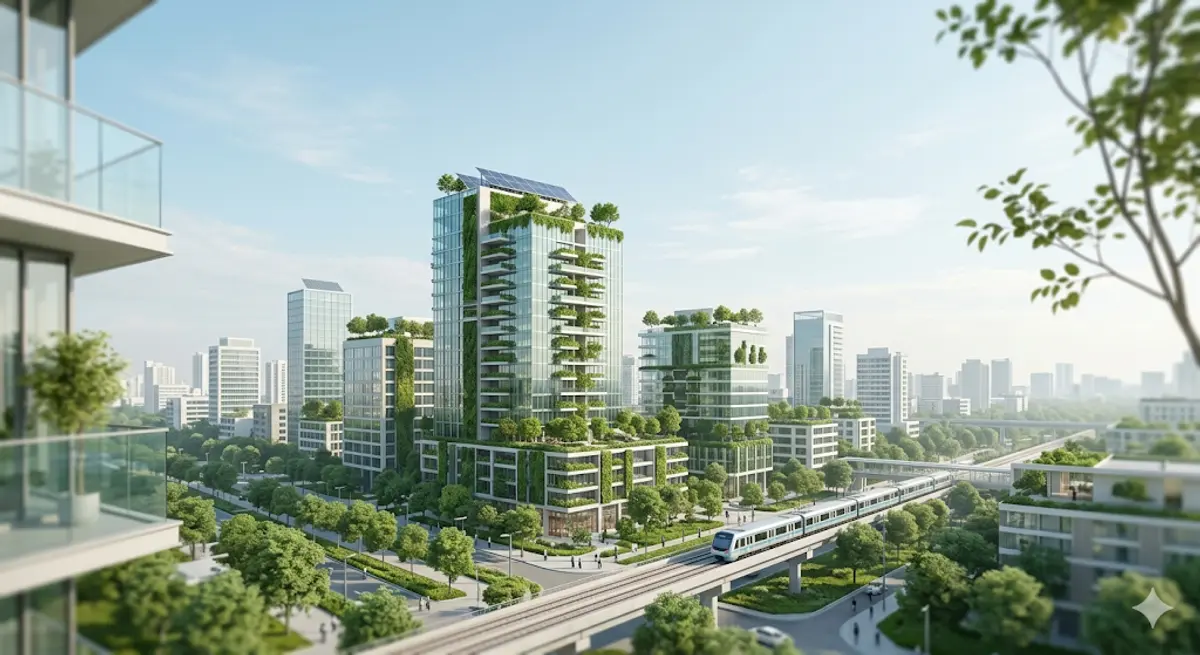
Green Buildings in NCR 2026 | Sustainable Real Estate Guide
Green Buildings in NCR 2026 | Sustainable Real Estate Guide
Why Green Buildings Matter in NCR
The National Capital Region — one of the world's most polluted urban agglomerations — faces acute air quality, water, and energy challenges. Green buildings offer a meaningful response to these challenges, providing healthier living environments, lower utility costs, and a reduced environmental footprint.
For real estate investors and buyers, green buildings represent future-proofed assets that will command growing premiums as environmental regulations tighten and buyer consciousness rises.
Green Building Rating Systems in India
India has three primary green building rating systems: IGBC (Indian Green Building Council), GRIHA (Green Rating for Integrated Habitat Assessment), and the LEED India certification from USGBC. Each evaluates buildings on parameters including energy efficiency, water conservation, material use, indoor air quality, and site sustainability.
Projects with IGBC Platinum or LEED Gold/Platinum ratings are considered the gold standard in sustainable residential construction in India.
Financial Benefits of Green Buildings
Green buildings in NCR typically achieve 20–40% savings on electricity bills through solar panels, LED lighting, and better insulation. Water-efficient fixtures and greywater recycling systems reduce water consumption by 30–50%.
These operational savings translate to lower maintenance charges for residents and higher net operating income for landlords — both of which enhance property value. Studies show that green-certified buildings command 5–15% price premiums in the NCR market.
Notable Green Projects in Gurgaon
Several prominent Gurgaon developments have achieved green certifications. DLF's commercial buildings have led the LEED certification story, and the trend is increasingly extending to residential developments. Godrej Properties is particularly committed to green building standards across its NCR portfolio.
The integration of rooftop solar, rainwater harvesting, organic waste composters, and electric vehicle charging infrastructure is increasingly standard in premium green residential projects.
The Health Dividend
Beyond financial returns, green buildings in NCR offer a significant health dividend. Better air filtration, reduced VOC (volatile organic compound) emissions from construction materials, and superior ventilation design result in measurably better indoor air quality — a critical benefit given NCR's outdoor air quality challenges.
Conclusion
Green buildings in the NCR represent the future of responsible and smart real estate investment. As government regulations become stricter, buyer awareness grows, and energy costs rise, green-certified buildings will command ever-greater premiums. Buying green today is both an ethical and a financially prudent choice.